
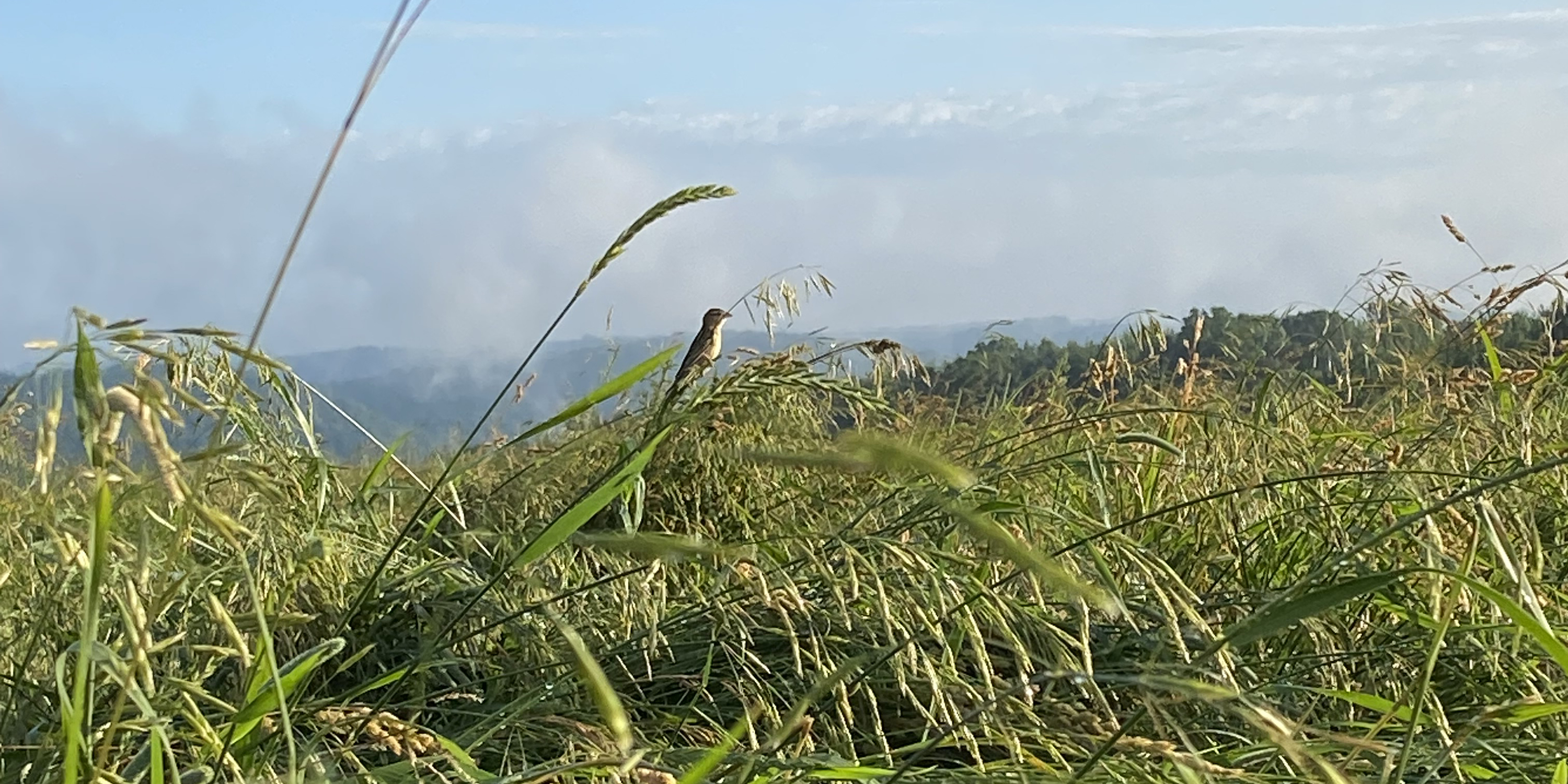
It is 4:52 am, June 5, 2025. The sky is just turning pink and orange on the horizon and the dew on the nearly waist-high grass is soaking the outer layer of my rain pants. To my left, the cattle are happily snacking in their pasture and in front of me, on a lone sapling, a male bobolink sings his heart out. His presence is due in no small part to those grazing cattle. I smile, enjoy his sunrise performance, and mark him down on my data sheet.
Grassland birds, such as the bobolink, have some of the most quickly declining populations in North America, driven by loss of grassland habitat. Historically, grasslands made up one-third of the landscape in the United States, but their lack of trees and flat or rolling terrain made them easy to convert for human uses. We have lost over 60% of our grassland acreage since 1970, making it the most threatened and least protected terrestrial ecosystem.
To understand how we got here and gain a deeper historical perspective, I turned to Jim Munsch, a Driftless Area grazier who permanently protected his farm with a conservation easement with Mississippi Valley Conservancy in 2011. Jim has been grazing cattle for more than 35 years and played a key role in developing the economic models for UW-Madison’s Grassland 2.0 project, a collaborative effort to restore ecological functions on farmlands through economically viable pathways. “Fire was a part of the pre-European prairie system, but it was not every year in every spot…prairie relied on hoofed animals [bison] to cycle nutrients and disturb the soil,” Jim said. As a conservation-minded grazier, Jim is dedicated to healthy soils. “Based on satellite imagery and other technologies, it has been estimated that in
Vernon County alone, one-half of all of the topsoil has been eroded,” Jim continued.
Today, bison no longer roam our landscape, and fire has been severely restricted, leaving our grasslands without the regular disturbance they need. In the Great Plains, the loss of grassland habitat to woody encroachment is now equivalent to acres lost to conversion to development and row crops. (Natural Resources Conservation Service (NRCS), 2021).
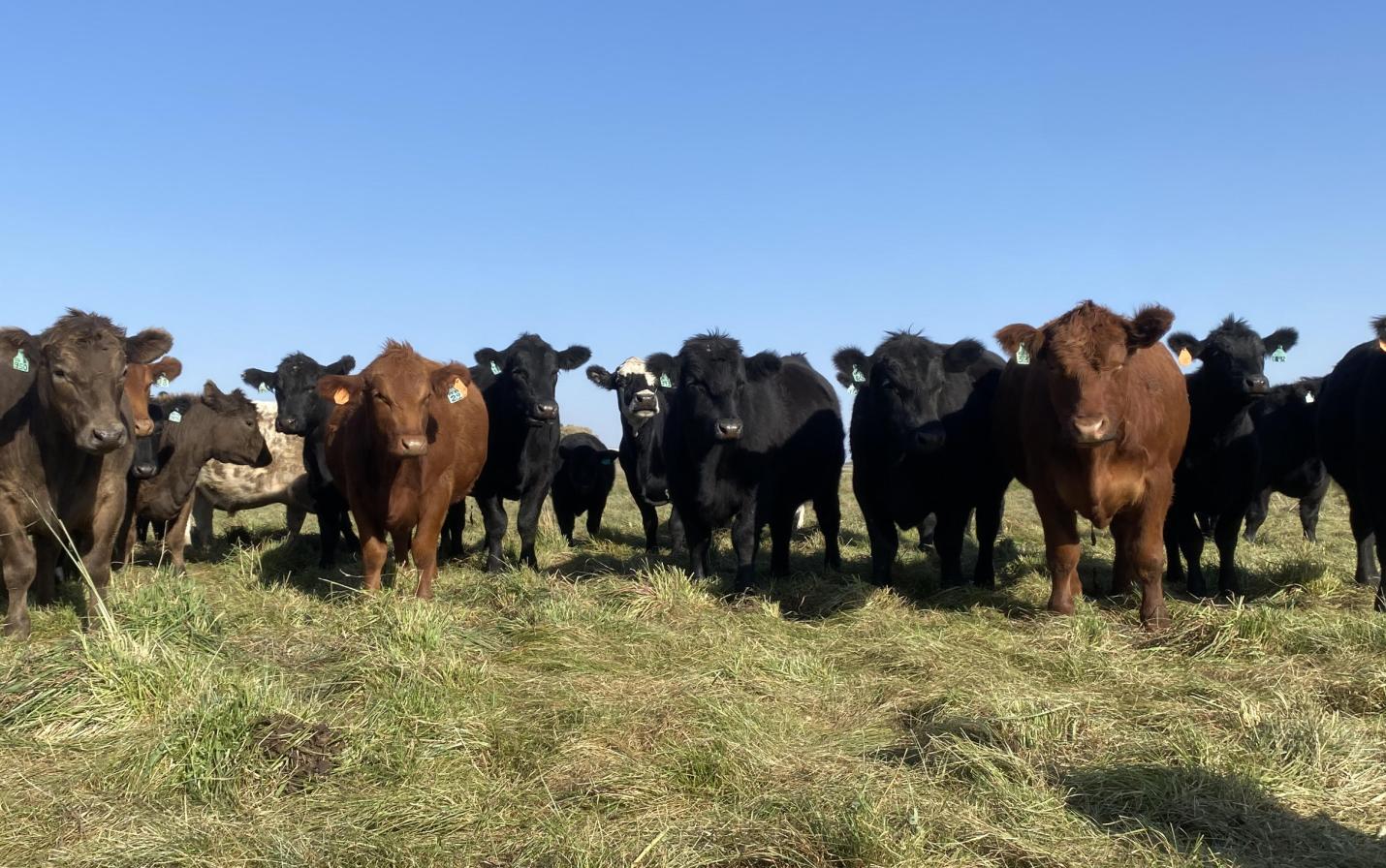
With more than 90% of grasslands in the United States owned or managed privately, it is landowners who hold the key to the future of both the habitat and the birds. Many of these private lands are in a grazing system, and if managed through adaptive grazing practices, they can be part of the solution. Jim’s solution? “You have to look at what nature was before man’s intervention [before the steel plow]…and you try to replicate it…The big difference between historical grazing and what we do is that now animals return to an area sooner.”
Jim has conducted multiple experiments on his farm to understand the impacts of different rest-rotation practices on the grassland birds that he sees. He knows when to expect his meadowlarks to return, that Henslow’s sparrows want more thatch, how their breeding timelines vary, and how he can provide for multiple species by shifting when and how he grazes, hays, or even rests an area. While he acknowledges that delaying grazing or haying may minimally decrease his animals’ weight gain, he also has found that letting pastures go to seed before putting out cattle has led to the pasture being reinvigorated the next year without him having to no-till additional seed.
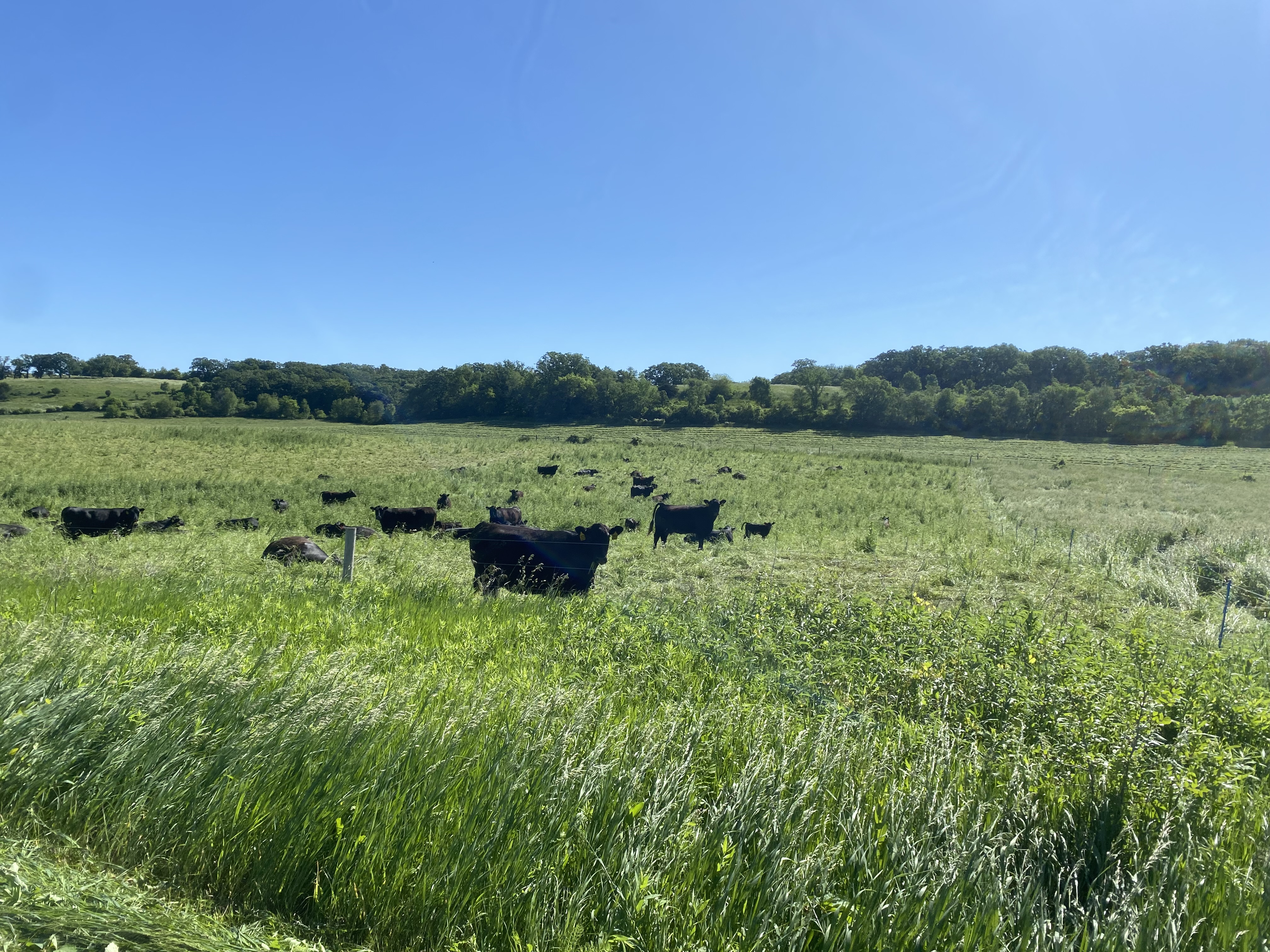
The healthy population of bobolinks, practices for building soil organic matter, and conservation-minded approach all contributed to making this property a high priority for Mississippi Valley Conservancy to protect. “The best conservation is when landowners lead by example, demonstrating not only the benefits to birds and soil, but also to their own bottom line,” said Abbie Church, conservation director for the Conservancy, “On my first visit to the property, Jim was breaking apart cow pies to show the healthy insect community breaking it down into useable soil as the bobolinks watched from a nearby fencepost. Too often you hear about all the soil lost, whereas this farm has the records to prove the practices are effectively building the soil.”
Protecting working lands like this one means ensuring that conservation values endure well beyond today’s ownership. Conservation easements can be thoughtfully tailored to support managed rotational grazing by requiring future landowners to submit grazing plans for areas designated for agricultural use. This approach allows Conservancy staff to confirm that grazing practices continue to strengthen soil health, protect water quality, and support biodiversity, preserving not only the productivity of the farm but the ecological benefits that made it worth protecting in the first place.
To encourage more graziers to take a bird’s-eye view, Audubon developed its Conservation Ranching certification, Audubon Certified Bird-Friendly Land. This program works alongside beef and bison graziers to build habitat management plans that incorporate the needs of the cattle and the needs of the grassland birds. The result is a mosaic of grassland habitat created by adaptive grazing that supports a wide variety of birds, from savanna sparrows to greater prairie chickens.
Landowners often ask me where their bobolinks have gone. And while the research has repeatedly shown that bobolinks require large tracts of treeless grassland, I always have to share with them my experiences on Jim’s slender ridgetop farm. It is filled with bobolinks. Jim’s pastures show what’s possible when grazing and birds thrive together—and with thoughtful management, any grassland, big or small, can become a haven for species like the bobolink.
To learn more about Audubon Conservation Ranching or explore certification opportunities in the Driftless Area, contact Krysten Zummo at
krysten.zummo@audubon.org.